
Dog Massage Tips for Beginners: How to Safely Massage Your Dog at Home

If you’ve ever found yourself rubbing your dog’s shoulders after a long walk or training session and wondering, “Am I actually helping or just guessing?”, you’re not alone.
Dog massage doesn’t have to be complicated, but there are some important basics to know before you start. When done correctly, dog massage can support mobility, relaxation, circulation, and overall comfort. When done incorrectly, it can miss the mark or worse, irritate something that’s already sore.
If you’re brand new to dog massage, these beginner tips will help you start safely and confidently. And if you want to go deeper, I also teach these foundations step-by-step inside my online dog massage course so you can learn proper techniques at your own pace.

Why Dog Massage Is Helpful (Even for Beginners)
Unless your dog has a contraindication, massage therapy is beneficial for all dogs, from couch companions to high-drive sport dogs.
Dog massage helps:
Increase blood flow to muscles
Reduce muscle tension and stiffness
Improve body awareness
Support recovery after exercise
Encourage relaxation and nervous system balance
For beginners, the goal isn’t to “fix” anything, it’s to support your dog’s body and learn how it responds to touch.
Tip #1: Start When Your Dog Is Calm
One of the biggest mistakes beginners make is trying to massage a dog who’s overly excited or distracted.
Choose a time when your dog is already settled:
After a walk
After training
In the evening when they naturally wind down
A calm dog is more receptive, and you’ll be able to notice subtle feedback like muscle tension, relaxation, or avoidance.
Tip #2: Use Light to Moderate Pressure
More pressure does not mean better results.
When you’re just starting out with dog massage:
Think gentle and slow
Your hands should sink into the muscle, not poke or press sharply
If your dog flinches, pulls away, or stiffens lighten up
Dog massage is about listening with your hands, not forcing change.
Tip #3: Stick to Simple Massage Strokes
You don’t need advanced techniques to help your dog.
Beginner-friendly dog massage strokes include:
Long, slow strokes along the muscles
Gentle circular motions over large muscle groups
Smooth movements that follow the direction of the muscle fibers
Avoid joints, the spine itself, and areas of obvious pain unless you’ve been properly trained.
Tip #4: Watch Your Dog’s Body Language
Your dog will always tell you how they feel, if you’re paying attention.
Positive signs:
Soft eyes
Leaning into your hands
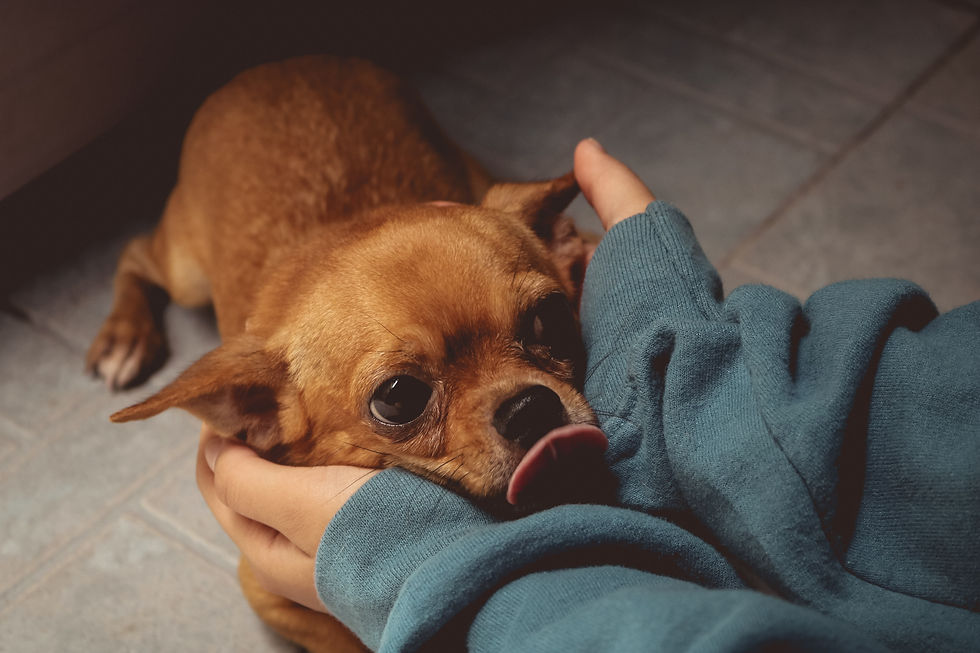
Relaxed breathing
Licking lips or sighing
Signs to stop or adjust:
Turning away
Tensing up
Moving away
Yawning repeatedly or licking excessively
Dog massage should feel safe and comfortable for your dog at all times.
Tip #5: Keep Sessions Short
More isn’t better, especially in the beginning.
For beginner dog massage:
5–10 minutes is plenty
Focus on one or two areas
End on a calm, positive note
You can always build duration as your confidence and your dog’s comfort grow.
Tip #6: Know When Not to Massage Your Dog
This is just as important as knowing how to massage.
Do not massage your dog if they have:
A fever or illness
Open wounds or skin infections
Recent surgery (unless guided by a professional)
Sudden, unexplained pain or lameness
When in doubt, always check with your vet or a trained professional before continuing.
Want to Learn Dog Massage the Right Way?
If you’re enjoying learning dog massage but want more structure, guidance, and confidence, my online dog massage course walks you through:
Safe massage techniques for beginners
Canine anatomy basics (without being overwhelming)
How to recognize soreness and tension
When massage helps and when it doesn’t
How to build a simple massage routine for your dog
It’s designed for dog owners who want to do better for their dogs without feeling intimidated or confused.
Dog massage doesn’t have to be complicated to be effective. Starting with the basics: calm timing, gentle pressure, simple strokes, and good observation can make a real difference in how your dog feels.
And the more you practice, the better you’ll get at understanding your dog’s body and what it needs.
If you’re ready to take the guesswork out of dog massage, my online dog massage course is there to support you every step of the way.


Comments