
Does Your Dog Need Strength Training? Why Walking Isn’t Enough for an Active Dog


Your dog gets lots of exercise.
They go for walks. They run around the yard. You throw the ball. Maybe you hike on the weekends.
Maybe they even compete in agility, IGP, flyball, dock diving or another dog sport.
So your dog is fit…right?
Well, maybe.
Being active and being physically conditioned are not necessarily the same thing.
And this is something I wish more dog owners knew about.
Your dog doesn't necessarily need MORE exercise. They may need better exercise.
I hear this one a lot:
“My dog gets tons of exercise, so they don't need fitness training.”
And I get it.
If your dog is running, playing and getting out every day, it seems like they should already be in great shape.
But everyday activity doesn't necessarily train the things that help your dog move well.
Strength.
Balance.
Coordination.
Body awareness.
Stability.
Control.
Those things can be developed intentionally through canine strength and conditioning.
And no, that doesn't mean putting your dog on a treadmill for an hour or making them do a million repetitions of something.
It means choosing exercises that actually have a purpose.
What is canine strength and conditioning?
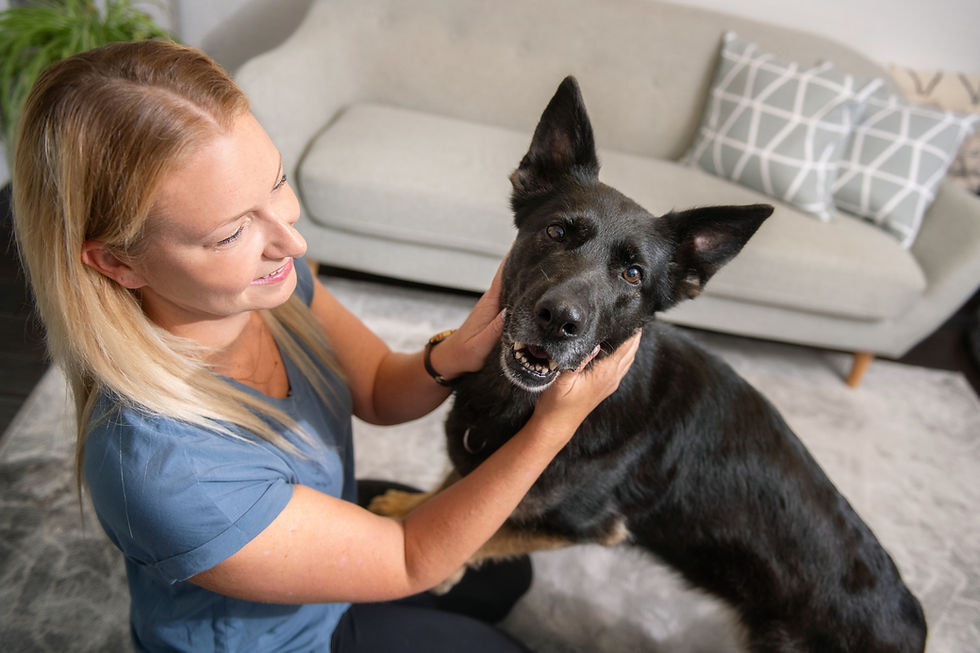
Canine strength and conditioning, sometimes called canine fitness or dog fitness training, is structured exercise designed to improve how your dog uses their body.
Rather than simply trying to make your dog tired, we're looking at how they move and what we can improve.
For example:
Can they shift their weight evenly?
Can they control their rear end?
Can they maintain their balance when their position changes?
Can they engage their core?
Can they control a movement instead of just falling into it?
Can they use both sides of their body effectively?
Can they build strength through a controlled range of motion?
These are all things I look at when I'm working with a dog.
And they're especially important for dogs who are asking more of their bodies.
Sport dogs are athletes.
If you have a sport dog, you already know how much they ask of their bodies.
An agility dog is accelerating, stopping, jumping and changing direction constantly.
A flyball dog is sprinting, jumping and making fast transitions.
A dock diving dog is generating a huge amount of force to launch into the water.
An IGP dog needs strength, power, control and endurance.
These dogs don't just need to be able to do the activity.
They need the physical foundation to handle the demands being placed on their bodies.
But you don't have a sport dog…
That's okay.
Your dog doesn't need to compete in anything to benefit from canine fitness.
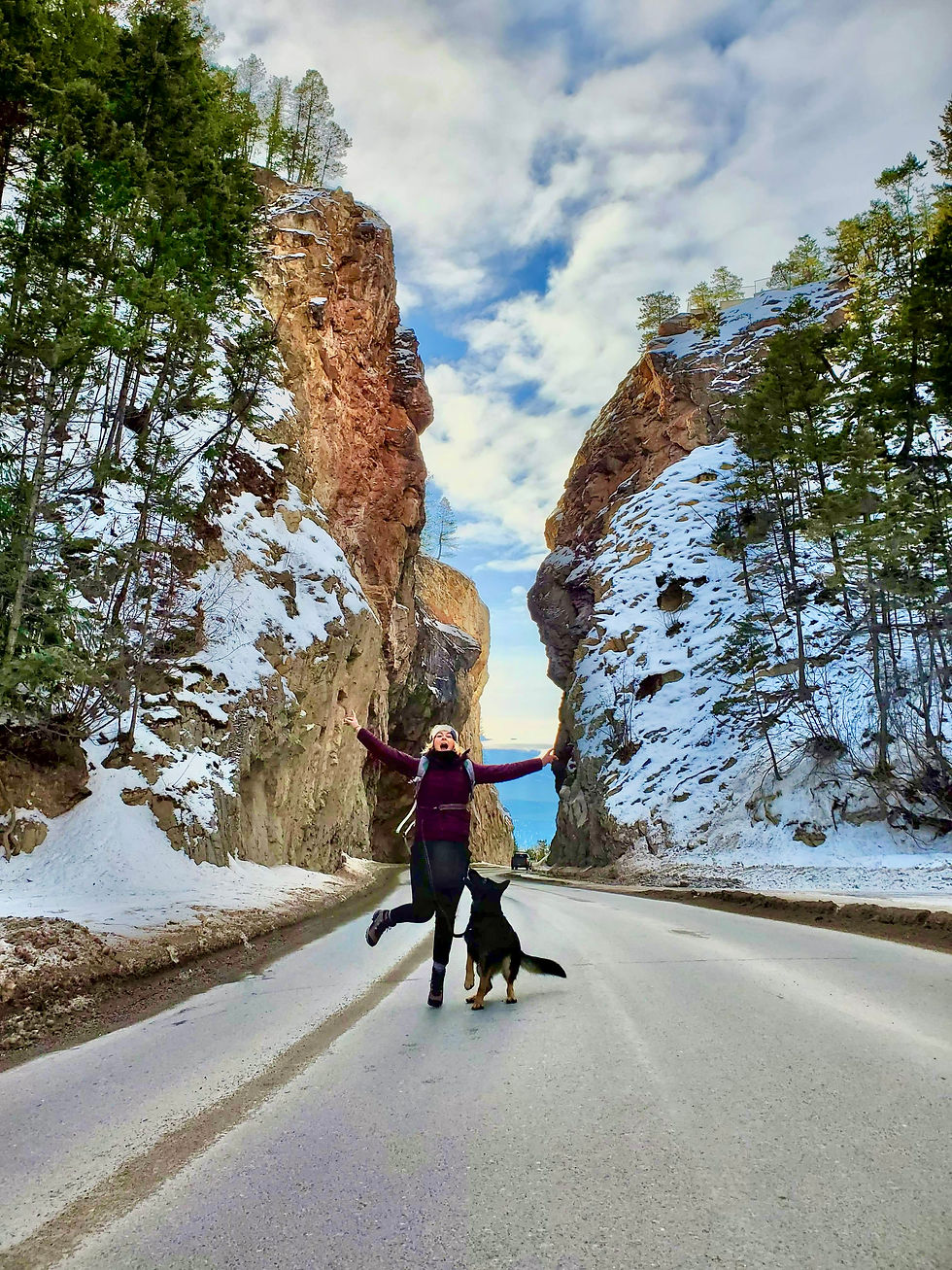
Maybe your dog is your hiking buddy.
Maybe you have a very active Labrador who spends their weekends running through the river valley.
Maybe you have a young dog who is still learning how to use their body.
Or maybe you have a senior dog and you want to help them maintain as much strength and mobility as possible as they age.

Fitness isn't just for canine athletes
I work with plenty of active companion dogs too.
Because being able to move well is useful whether your dog's biggest athletic accomplishment is winning a national championship or sprinting across the backyard after a squirrel.
What about senior dogs?
This is another reason I love canine conditioning.
As dogs age, maintaining muscle and physical function becomes increasingly important.
But senior dog fitness shouldn't mean pushing an older dog through a hard workout.
It's about finding the right exercises and the right level of challenge for that individual dog.
Sometimes that means working on simple strength exercises.
Sometimes it's balance and body awareness.
Sometimes it's controlled movement.
Sometimes it's simply helping a dog feel more confident using their body again.
The goal isn't to make your senior dog an athlete.
It's to help them stay as strong, mobile and capable as possible.
And this is why I don't use the same exercises for every dog.
This is probably one of the biggest things I want people to understand about canine fitness.
You can find hundreds of dog exercises online.
That doesn't mean every exercise is appropriate for every dog.
A six-year-old agility dog with excellent fitness isn't going to have the same needs as a nine-year-old Labrador who has never done structured conditioning.
And neither of them should have the same program as a young dog just learning body awareness.
Before I start throwing exercises at a dog, I want to know what that dog needs.
I look at their movement, their current fitness level, their activity, their goals and what they're physically capable of doing.
Then we build from there.

It's not about making your dog tired.
This is another big misconception.
A workout isn't automatically good because your dog is exhausted afterward.
In fact, more isn't always better.
If your dog already spends hours running around every week, adding even more running may not be what they need.
Maybe they need to get stronger.
Maybe they need better stability.
Maybe they need to improve their body awareness.
Maybe they need to learn how to control their movements.
Maybe they need a more balanced approach to their conditioning.
That's why I look at movement quality, not just how much activity your dog gets.
Canine fitness can also be part of injury prevention.
Obviously, no conditioning program can guarantee that your dog will never get injured.
Dogs are going to be dogs.
They will launch themselves off things they shouldn't.
They'll make questionable decisions at full speed.
They'll chase squirrels.
They'll slip.
They'll play too hard.
That's life.
But building strength, coordination, balance and body awareness can help give your dog a better physical foundation for the activities they already enjoy.
And for sport dogs especially, I would much rather see owners thinking about conditioning before their dog has a problem instead of waiting until they're trying to get back from an injury.
Looking for canine fitness in Edmonton?
If you've been searching for canine fitness in Edmonton, dog fitness in Edmonton, canine strength and conditioning, or a dog conditioning program, this is exactly the type of work I love doing.
At K9 Muscleworks, I work with sport dogs and active companion dogs to develop individualized strength and conditioning programs based on their body, movement patterns, current fitness and goals.
I offer a 6-week personalized canine strength and conditioning program with progressive exercises, coaching and reassessment so we're not just handing you a list of random exercises and sending you on your way.
Programs can be done virtually or in person, and Edmonton-area clients can also choose mobile in-home coaching.
Because your dog doesn't need to have a problem before you start paying attention to how well they move.
Build the strength before they need it.
If you're in Edmonton or the surrounding area and want to know whether canine fitness or strength and conditioning would be a good fit for your dog, get in touch.
I'd love to help you figure out where to start.


Comments