
Hiking With Your Dog: How to Keep Them Comfortable Before, During & After

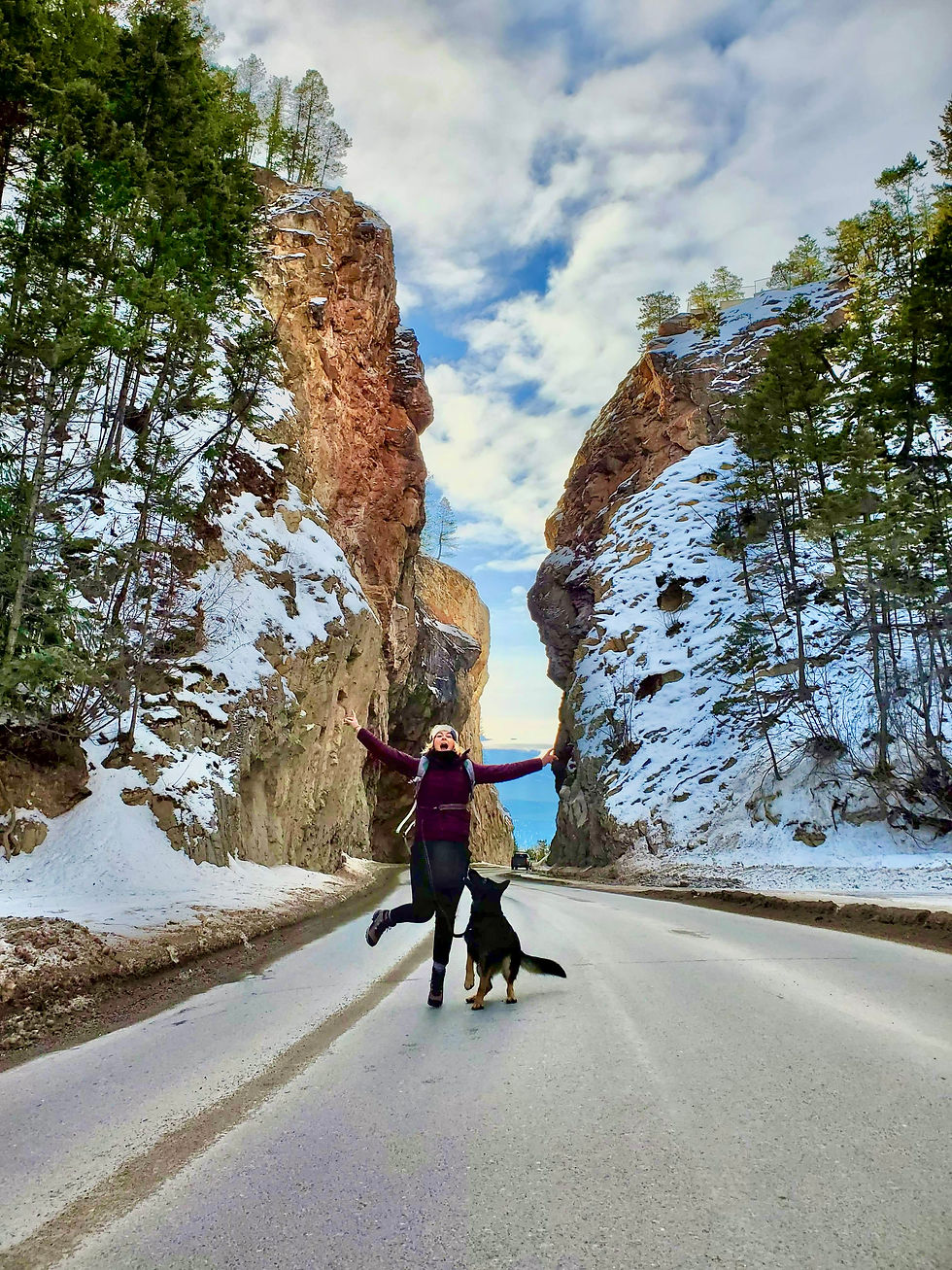
If your dog sees you put on hiking shoes and immediately starts losing their mind, you're not alone.
Dogs LOVE adventures.
They don't care if the trail is 2 km or 20 km. They don't care if there's a giant hill ahead. They certainly don't care that you haven't been hiking in six months.
They just know we're going somewhere.
And while I am 100% in favour of getting your dog outside, moving their body and letting them actually be a dog, there is one thing I wish more people thought about:
Your dog's body still has to do the work.
Hiking is exercise. And depending on the terrain, it can be a LOT more exercise than your dog's regular neighbourhood walk.
If you live in Edmonton or the surrounding area and like getting out with your dog, here are a few things to keep in mind before you head out on your next adventure.
Your dog probably won't tell you when they've had enough
This is one of the biggest problems.
Your dog is having the BEST DAY EVER.
They're sniffing. Running. Climbing. Jumping over logs. Pulling you up the hill. Then running back down because apparently they forgot you were behind them.
They're having fun.
That doesn't mean their muscles aren't getting tired.
Most dogs aren't going to stop and say, "You know what? I'm feeling a little fatigued. Let's call it a day."
They're going to keep going because there are things to smell.
So you have to pay attention to the dog, not just the enthusiasm.
If your dog starts slowing down, stumbling, changing their gait, sitting or lying down more than usual, struggling with hills, or generally looking like they're working harder than they were earlier in the hike, that's information.
And no, your dog doesn't get extra points for finishing the trail.
A hike is not the same as a walk around the block

This seems obvious, but it's easy to forget.
Your dog's normal 30-minute neighbourhood walk might involve relatively flat pavement or sidewalks.
A hike can involve:
Hills
Uneven ground
Rocks
Roots
Mud
Loose gravel
Jumping
Climbing
Descending
Constant changes in direction and footing
That's a completely different physical demand.
And honestly, that's one of the things I love about hiking with dogs.
They're not just walking forward. Their body is constantly adjusting to the terrain.
They're using their core, changing how they place their feet, shifting their weight and working muscles differently than they would on a flat sidewalk.
It's great exercise.
But great exercise still needs to be built up gradually.
Don't make the first hike of the season a marathon
You know your dog.
You also know that your dog will probably act like they've been training for this moment their entire life.
That doesn't mean they have.
If your dog hasn't been doing much conditioning and you suddenly take them on a long, challenging hike, don't be surprised if they're stiff and uncomfortable afterward.
Start with something manageable and build from there.
Increase distance, duration and difficulty gradually.
And don't only consider how your dog looks when you get back to the car.
Pay attention to the next day.
That's often where you'll get some really useful information.
Hills are work
Going uphill and going downhill aren't the same thing.
Uphill work can be demanding on the muscles that drive your dog's hind end.
Going downhill requires your dog to control their movement and body weight as they descend.
Now add uneven terrain and your dog is doing a lot of work to keep themselves balanced and moving efficiently.
Which is exactly why hiking can be such a great addition to a dog's fitness routine.
But if your dog isn't conditioned for it, that extra workload can catch up with them.
Especially if they're the type who thinks every hill is a race.
Let your dog warm up before they go full idiot
I say this with love.
But if your dog jumps out of the vehicle and immediately takes off at full speed, maybe don't let the first five minutes of the hike be a sprint.
Start walking.
Let them sniff.
Let them settle into the movement.
Give their body a chance to warm up before asking them to do the hard stuff.
You don't need to perform some elaborate pre-hike stretching routine.
Just don't go from zero to full send.
What happens after the hike matters too

This is probably the part I want dog owners to pay more attention to.
Your dog comes home.
They drink half their body weight in water.
They eat.
They sleep for four hours.
You assume everything is great.
But what happens when they get up?
Are they moving normally?
Do they get up easily?
Are they stiff?
Are stairs suddenly harder?
Are they reluctant to jump into the vehicle?
Are they walking differently?
Are they unusually quiet?
Or are they completely back to their normal selves?
Being tired after a big hike is normal.
Being sore enough that your dog's movement is noticeably different is something I would pay attention to.
And if your dog is showing pain, lameness or something that doesn't seem right, that's a veterinary conversation.
Massage isn't a substitute for figuring out what's actually going on.
So where does dog massage fit in?
This is where I think people sometimes misunderstand canine massage.
I'm not talking about taking your dog to get "pampered" after a hike.
I'm talking about bodywork as part of taking care of an active dog's body.
Dogs that regularly hike, run, train, compete or participate in other activities put a lot of demands on their muscles.
Regular bodywork can be one part of a bigger picture that includes appropriate exercise, conditioning, recovery, nutrition and veterinary care when needed.
At K9 Muscleworks, I'm looking at the dog in front of me—not just rubbing their muscles because they went for a walk.
I'm assessing what I'm feeling through the soft tissues and working accordingly.
And no, your dog doesn't have to be an agility or IGP dog to benefit from having someone pay attention to how their body is handling the activities they love.
Your weekend hiking dog counts too.
A few things I always like to have with me
You don't need to pack the entire contents of your house for a hike.
But a few things are worth having:
Water and a bowl. Don't assume there will be a convenient water source that is clean and safe for your dog.
A leash. Even if your dog has a fantastic recall, you never know what you're going to encounter on a trail.
Poop bags. Because apparently this still needs to be said.
A towel. Especially if your hike involves Alberta mud. Which it probably will at some point.
A basic first-aid kit. Because paws, sticks and dogs aren't always the best combination.
A plan for getting home. If you're hiking somewhere remote, think about what you'll do if your dog can't comfortably finish the hike.
Your dog doesn't need to be exhausted to have had a good hike

This is probably my biggest takeaway.
I don't think the goal of every hike should be to completely wear your dog out.
A tired dog isn't automatically a well-exercised dog.
I'd much rather see a dog finish an adventure happy, physically challenged and still moving well than one who has been pushed until they're completely cooked.
The goal is to build a dog who can do the things you enjoy doing together.
And if hiking is one of those things, build their fitness for it.
Pay attention to how they move.
Pay attention to how they recover.
And remember that just because your dog is willing to keep going doesn't necessarily mean their body should.
Because there will always be another trail.
And your dog will probably be ready to go again tomorrow.
Obviously.


Comments