
How Often Should Your Dog Get a Massage?

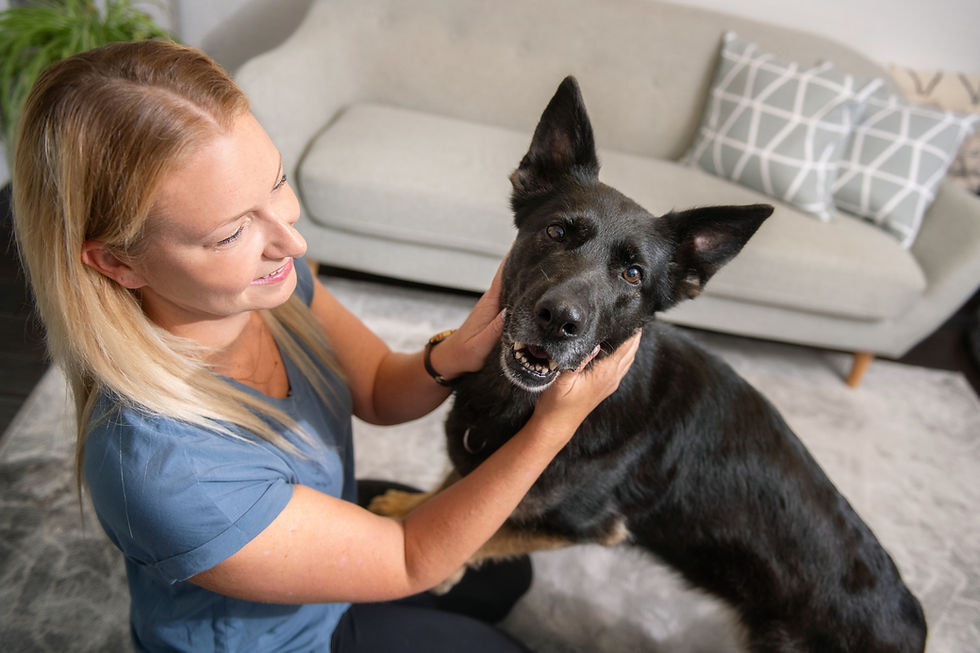
One of the questions I get pretty regularly is:
“How often should my dog get a massage?”
And unfortunately, there isn't one magic answer.
It depends on the dog, what we're working on, their activity level, their age, and whether we're doing massage for general maintenance or because there is something specific we are trying to improve.
But if you're asking me for a general starting point, monthly massage is what I typically recommend for maintenance.
Monthly massage for maintenance
If your dog is healthy, active and you're looking at massage as part of their regular wellness routine, once a month is a great place to start.
This is especially useful for dogs who are active in sports, regularly hiking, running, playing hard or simply getting older.
I like regular maintenance because I'm not waiting for your dog to be obviously uncomfortable before I see them.
By seeing a dog consistently, I get to know what their normal feels like. I can keep an eye on areas that tend to get tight or overworked and see how things change from one appointment to the next.
And honestly, dogs are pretty good at hiding things.
Sometimes a dog looks completely fine to their owner but I can feel that something has changed when I'm working through the muscles.
That's one of the reasons I like massage as part of preventative care, rather than only thinking about it when there is a problem.
What if we're working on something specific?
This is where I may recommend coming in more often.
If I'm working with a dog who has some areas of muscle tension, compensation or movement patterns that we're trying to improve, I may recommend every two weeks for a period of time.
The goal isn't to have your dog booked every two weeks forever.
We're trying to make some changes, reassess how they're responding and give the body some time between sessions.
As things improve, we can usually spread appointments back out to a maintenance schedule.
What about an injury?
This is different again.
If your dog has an injury, the appropriate schedule depends on the injury, where they are in the recovery process and what their veterinary or rehabilitation team has recommended.
In some situations, I may want to see them within a week and then reassess from there.
Massage can be used alongside a rehabilitation plan, but it shouldn't replace veterinary assessment or appropriate treatment for an injury.
And I don't just want to keep massaging the same sore spot over and over and call that treatment.
We need to understand what's happening with the dog and what we're actually trying to accomplish.

Sport dogs may need something different
If you have a sport dog, the answer can change again.
A dog competing regularly is putting very different demands on their body than a dog who goes for a couple of walks a day.
Training, competition, jumping, sprinting, quick turns, repetitive movements and recovery all factor into how I approach their bodywork.
For some sport dogs, monthly maintenance is plenty. Others may benefit from more frequent sessions during heavier training or competition periods.
The schedule should fit the dog and their workload, not just the calendar.
And then there are senior dogs
Older dogs are another group where I often like regular appointments.
Sometimes the goal isn't about fixing anything at all.
It's about keeping them comfortable, maintaining movement and paying attention to changes as they age.
For a senior dog, massage may become part of their overall quality-of-life routine.
And sometimes that means changing the frequency depending on how they're doing.

What about end-of-life care?
This is probably one of the most meaningful reasons I provide massage.
When a dog is nearing the end of their life, the goal is different.
We're not trying to improve athletic performance or work toward a particular movement goal.
We're looking at comfort and quality of life.
Depending on the dog, I may recommend more frequent visits — sometimes even weekly — if massage is helping them stay comfortable and they enjoy the sessions.
These appointments can be very different from a typical massage. I adjust everything to the dog in front of me and what they can comfortably handle that day.
Sometimes the best session is a very gentle one.
Sometimes it's simply giving a dog some comfortable hands-on attention when they need it most.
So, how often should your dog get a massage?
If you want the short version:
Monthly: General maintenance, wellness and active dogs.
Every 2 weeks: When we're working on specific areas of tension, compensation or movement that we're trying to improve.
Around 1 week or as recommended: During certain injury-recovery situations, depending on the individual dog and their veterinary/rehabilitation plan.
As needed: Senior dogs or dogs receiving massage for comfort and quality of life.
And of course, these aren't hard rules.
Your dog's massage schedule should change as your dog changes.
That's actually one of the biggest reasons I don't like the idea of putting every dog on the exact same massage schedule.
Your dog isn't the same as every other dog.
Their body, lifestyle, age, activity level and history all matter.
If you're wondering whether your dog would benefit from regular canine massage, that's something we can figure out together.
K9 Muscleworks offers professional dog massage in Edmonton and surrounding areas, with both in-home and in-clinic appointments available.
Book a dog massage with K9 Muscleworks or contact me if you're not sure what type of schedule would make sense for your dog.



Comments